Buscar este blog

Mostrando entradas con la etiqueta Urban. Mostrar todas las entradas

jueves, 22 de septiembre de 2011

Evacuation plan – Planning to bug out during an emergency


Having an emergency evacuation plan  is critical in any survival situation.  If the SHTF, having a plan of action will put you about 20 steps ahead of the mindless morons who spent their time watching T.V.
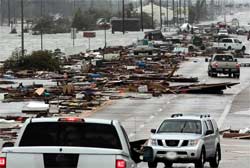
evacuating during a disaster 
Your Evacuation plan should take into account the following things:

Most likely emergency scenarios
Put on your thinking cap! Start to list the most likely emergency situations that can take place. Hurricanes, Earthquakes, Civil Unrest, War, Riots,  Nuclear or Terror Attacks, Etc…
Sketch out some ideas of what you would do when the SHTF and put together a custom survival plan for each scenerio
.
Stay or Go?
This decision can be huge; each choice has benefits and risks associated with it. Think about what things would have to happen to make you leave your home.  Hint: if you waited for the government to issue mandatory evacuation orders, you waited to long.

Meet up place
When disaster hits there is a good chance that your family may not be together. Now is the time to decide on a family meeting place. Pick a place that is easy to find and make sure each member of your family can find it during an emergency.

Have multiple routes out.
Keep in mind that during a disaster most of the major highways are going to be completely clogged with people trying to get out. Plan now, and map out as many routes as possible. Use Google Maps to print out possible evacuation routes and then laminate the paper so it hold up when you need it.
Don’t forget to print out vehicle and walking routes (hiking trails, railroad tracks, side roads etc… should all be considered.)

Survival Supplies:

What items do you need to survive for 72 hours, a week, a month or even indefinitely? Put together a survival / Bug Out Bag of essential items that you will need to survive each situation.
Your bag should be designed around your family, climate and health. There is no one size fits all bag, so make sure you pack the items that you need to survive.

Where will you go?
Bugging out without a place to go isn’t a plan. Make sure you know where you are going before disaster strikes. If you don’t own land or a second house, then look for areas to camp that can sustain you and your family.
You may also want to look into investing in a bug out vehicle, a 4 season tent or a small travel trailer.

Survival Communications – The C.B. Radio


C.B Radios are once again gaining popularity among truck drivers, RVers and some survivalists. A properly tuned CB has a range of around 10-20 miles but is commonly illegally tweaked to transmit over hundreds of miles.
While my choice of radios always falls towards a mulit-band ham radio, I always have the C.B. frequencies programmed into my radio so I can scan the local area during an emergency.
Citizens’ Band radio (better known as CB radio) is a short-distance radio communications that takes up 40 radio channels from 26.965 to 27.405 MHz.

CB FREQUENCY / CHANNEL INFORMATION
CB Channel Frequency Frequency Use
Channel 1 26.965 MHz
Channel 2 26.975 MHz
Channel 3 26.985 MHz
Channel 4 27.005 MHz Used by many 4X4 clubs
Channel 5 27.015 MHz
Channel 6 27.025 MHz many operators using illegal high-power amplifiers
Channel 7 27.035 MHz
Channel 8 27.055 MHz
Channel 9 27.065 MHz Channel 9 is the universal C.B. emergency channel
Channel 10 27.075 MHz
Channel 11 27.085 MHz
Channel 12 27.105 MHz
Channel 13 27.115 MHz Often used in some areas for marine use & recreational vehicles.
Channel 14 27.125 MHz Frequency for many walkie-talkies
Channel 15 27.135 MHz
Channel 16 27.155 MHz Used by many 4X4 clubs
Channel 17 27.165 MHz Used by truckers on the east-west roads in California
Channel 18 27.175 MHz
Channel 19 27.185 MHz unofficial Trucker channel
Channel 20 27.205 MHz
Channel 21 27.215 MHz Used by truckers for North-South routes in some areas of the country
Channel 22 27.225 MHz
Channel 23 27.255 MHz
Channel 24 27.235 MHz
Channel 25 27.245 MHz
Channel 26 27.265 MHz
Channel 27 27.275 MHz
Channel 28 27.285 MHz
Channel 29 27.295 MHz
Channel 30 27.305 MHz 30 and up are often used for SSB operation
Channel 31 27.315 MHz
Channel 32 27.325 MHz
Channel 33 27.335 MHz
Channel 34 27.345 MHz
Channel 35 27.355 MHz
Channel 36 27.365 MHz
Channel 37 27.375 MHz
Channel 38 27.385 MHz unofficial SSB calling channel, LSB mode
Channel 39 27.395 MHz
Channel 40 27.405 MHz
CB Resources & Radios